

Xavier Martos, Managing Director of Beckhoff Automation Spain
Producing more, with greater flexibility and using fewer resources is one of the biggest challenges facing the packaging industry. For Xavier Martos, Managing Director of Beckhoff Automation Spain, the answer lies in moving towards increasingly connected, adaptable and software-defined lines, capable of responding to format changes, smaller batches and new traceability requirements. AI also opens up new possibilities in areas such as quality control, predictive maintenance and process optimisation. All of this without losing sight of sustainability, which is increasingly linked to production efficiency. Beckhoff, which will be taking part in Hispack as a Global Partner, will bring its latest automation solutions to the show for a sector in the midst of transformation.
The packaging industry is under intense pressure to produce more while consuming fewer resources. Where do the main automation challenges lie today?
The main automation challenges in packaging lie in increasing performance without passing the cost on to more material, energy, labour or operational complexity. Today they are concentrated in areas such as format variety, sustainable materials, 100% quality in high-speed processes, predictive maintenance, machine integration, traceability, cybersecurity and so on.
The challenge is no longer to automate a single machine, but to build a connected, adaptable and efficient line that produces more good units per hour, with less material, energy, downtime and manual work.
To what extent has flexibility already become an essential requirement for packaging machinery manufacturers?
The level of flexibility depends on the sector and the production model.
In high-volume lines with few formats, speed, robustness and cost per unit remain the priorities. But in food, beverages or cosmetics, a rigid machine dedicated to a single format is increasingly a risk: it limits the ability to respond to new SKUs, campaigns, regulatory changes or fluctuations in demand.
Therefore, flexibility no longer simply means ‘being able to produce two or three formats’. For a competitive machinery manufacturer, it means offering fast format changeovers, modular architectures, adaptable motion and data integration for traceability and diagnostics.
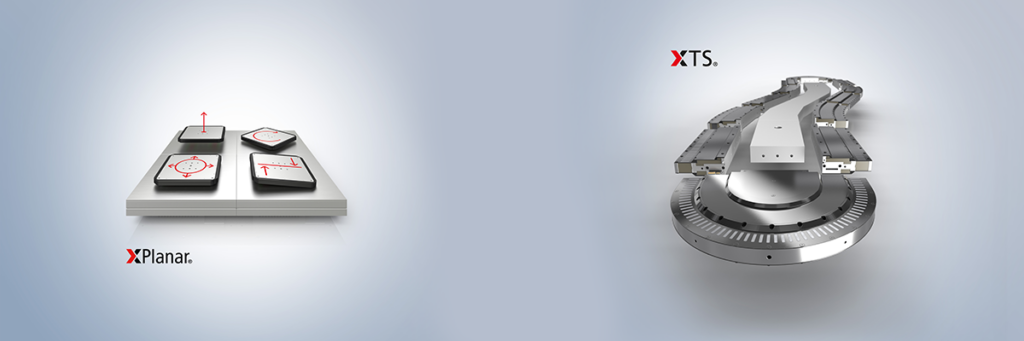
In this context, XTS and XPlanar respond to a structural need: to make flexibility a native function of the machine, rather than a costly adaptation made afterwards.
Beckhoff is betting on systems such as XTS and XPlanar. How are these technologies transforming the design of packaging machines?
XTS and XPlanar make it possible to replace rigid mechanisms with intelligent, software-controlled transport systems in which each product can move independently according to the needs of the process.
This makes it possible to integrate more operations into a single machine, reduce mechanical components, speed up format changeovers and design more compact, flexible and modular lines. XPlanar also adds two-dimensional movement, with rotation and tilting of the product.
Reducing space, cabling and complexity is another of the company’s key focuses. What impact can more compact automation have on plant efficiency?
More compact automation reduces machine size, cabling, installation time and maintenance requirements. This frees up production space, simplifies expansions and reduces engineering costs.
In addition, by integrating control, drives and I/O close to the process, operational efficiency improves and diagnostics become easier, resulting in more agile, scalable and easily maintained plants.
Beckhoff already incorporates AI-based tools for engineering and optimisation. What role do you think AI will play in the next generation of packaging machines?
The use of AI in packaging automation means moving from equipment that executes pre-programmed sequences to systems capable of interpreting data, adapting and optimising decisions during production.
Its main applications include automated quality control, predictive maintenance and the optimisation of machine parameters according to the product, material or format. It can also help to improve planning, traceability and the identification of the causes of potential defects.
AI does not replace conventional automation; it extends it with a layer of analysis and optimisation. Ultimately, it makes it possible to reduce waste and downtime, improve availability and quality, and better adapt lines to variations in product and demand.
Can automation also help make packaging more sustainable, or does its contribution lie mainly in productivity?
Automation is not limited to increasing productivity. In fact, productivity and sustainability are often directly related when consumption is measured per unit produced.
As a result, there is less wasted material, lower energy consumption, better use of sustainable materials and data for continuous improvement.
Therefore, sustainable automation is not simply about ‘going faster’, but about manufacturing more correct units with less energy, material, space and waste.
Sectors such as food, pharma and cosmetics increasingly demand personalisation and small batches. How is automation technology responding to this change?
Automation is responding with increasingly flexible and modular machines, capable of making fast format changes via software and producing small batches efficiently. The integration of robotics, vision and inspection also means that a single line can handle more SKUs, packs and variants without losing productivity.
In an increasingly automated sector, where do you think the real competitive advantage of packaging companies will lie in the coming years?
In my opinion, the competitive advantage of packaging companies in the coming years will not depend solely on price or production capacity. It will come from combining sustainability, operational flexibility, automation and the ability to add value for the customer.
In strategic terms, the advantage will shift from the packaging manufacturer to the packaging solutions provider: sustainable, automated, traceable, adaptable and closely integrated with the customer’s processes.
Beckhoff is taking part in Hispack as a Global Partner. What value does it hold for the company to be present at a show that brings together the whole packaging value chain?
The packaging sector is one of the most important sectors for Beckhoff, not only nationally but internationally. Beckhoff, as a group, has very important customers in different areas of packaging who have backed our technology in their processes. Our presence at Hispack is of great value in demonstrating that we stand by our customers, understand their needs and provide solutions jointly, as well as in showcasing all the new developments we are creating for this purpose.
Cristina Benavides
Hispack contributor